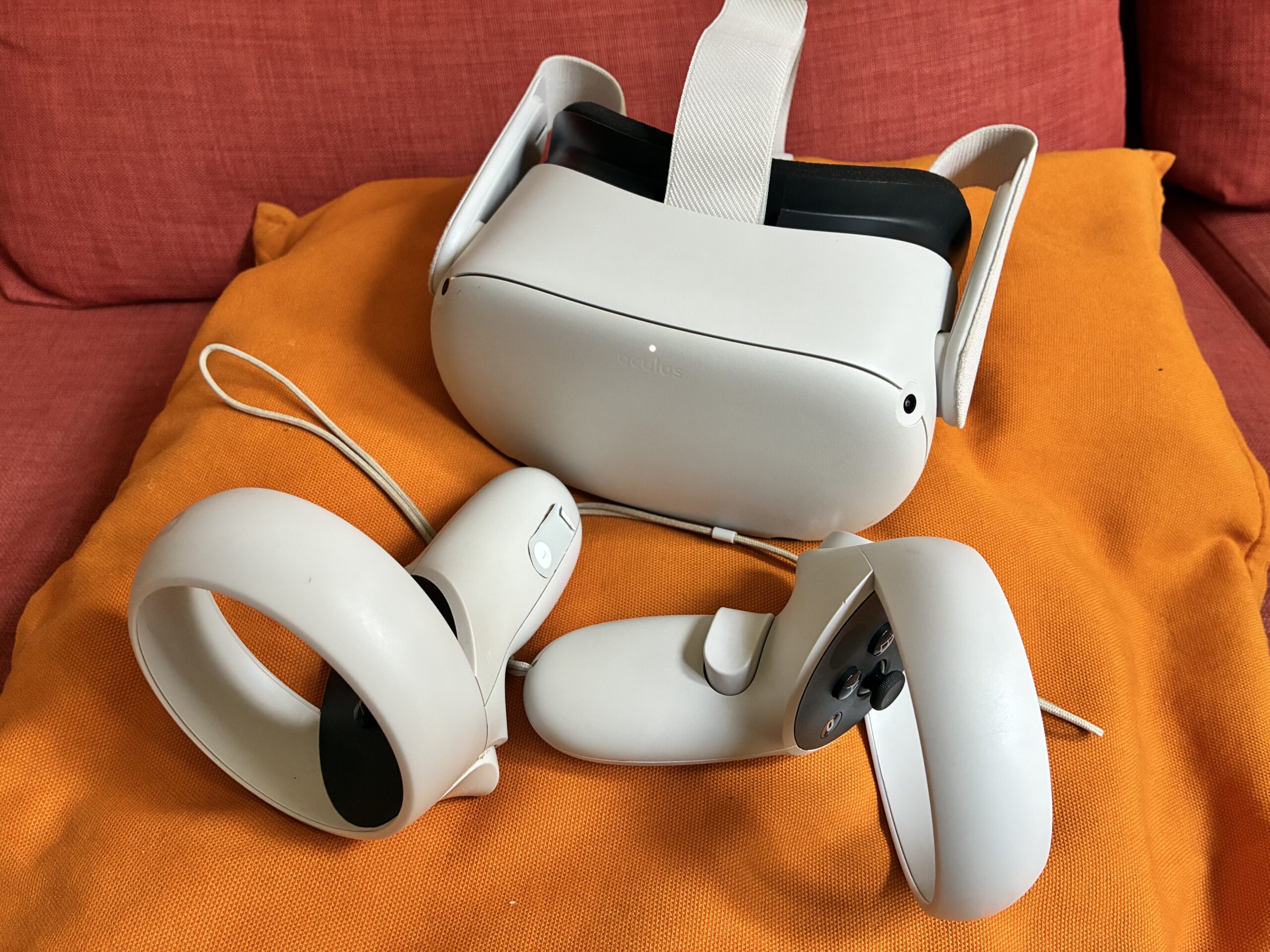

One of the more interesting developments in the Dr Amblyo trainer over the last few sessions has not been a dramatic leap in “vision”, but a growing sense that the system is beginning to recruit my weaker eye more actively into the task itself. The recent left-eye-only cueing changes feel subtle while playing, but noticeably different afterwards. Rather than simply feeling tired, the area around and behind my left eye now feels stimulated in a way that resembles effort or engagement.
What surprised me most was noticing a visible change outside the headset. Over the last few years my left eyelid had developed a fairly noticeable droop, something I had more or less accepted as part of living with amblyopia. Looking in the mirror recently, I realised that it seems to be reversing slightly. Not dramatically, but enough to feel significant.
Thinking through the physiology of this has become almost as interesting as the technical implementation itself. The trainer is not “strengthening an eye” in isolation so much as changing the behavioural value of the information coming through it. Traditional patch therapy works by removing the stronger eye from the equation. This project has gradually moved toward a different approach: creating situations where the weaker eye has access to information that is genuinely useful to performance.
In practice, this means the brain is being encouraged to treat input from the amblyopic eye as relevant again. Because the experience happens in VR, the interaction becomes highly embodied. Head movement, depth perception, spatial prediction, timing, and visual attention all become linked together in real time. The system is “latency sensitive” in the sense that perception and action are tightly coupled: the brain is continuously predicting and correcting based on incoming visual information rather than passively observing a screen.
The more I work on this project, the less it feels like a conventional game prototype and the more it resembles a small-scale experiment in neuroplasticity and perception. I am not expecting a miracle cure, but it is encouraging to begin noticing changes in precisely the systems I hoped to engage: attention, coordination, visual participation, and perhaps even the bodily posture surrounding the eye itself.